
Custom Socks vs. Other Corporate Swag: Which Promotional Items Actually Get Used?
Every year, companies spend billions on branded promotional products. Most of it ends up in a drawer, a donation bin, or the trash. The question every smart buyer eventually asks is not "what's the cheapest option?" — it's "what will people actually use?"
The answer matters because unused swag is not just a waste of budget. It's a missed brand impression. Every item that sits in a closet is an impression that never happened.
Custom Lab is powered by Outway, the performance sock brand behind more than 5 million pairs delivered. We have a vested interest in this conversation—but the data speaks for itself.
The Problem With Most Corporate Swag
The promotional products industry generates over $26 billion annually in the US alone. The vast majority of that spend goes to items with one thing in common: low daily utility.
The Advertising Specialty Institute (ASI) tracks how long people keep promotional products and how often they use them. Their research consistently shows that wearable items — specifically socks, hats, and outerwear — generate the most impressions per dollar of any promotional product category. The reason is simple: people wear clothing every day. A sock worn three times a week generates more brand impressions in a month than a pen used once and pocketed.
The issue is not the category. It's the quality. A poor-quality wearable item gets donated or thrown away faster than a cheap pen. Quality determines whether the item earns rotation — and rotation is where the ROI lives.
How the Most Common Swag Items Stack Up
Branded Pens
Cost per unit: low. Retention rate: extremely low. Pens get used until they run out of ink, then discarded. Nobody keeps a branded pen because it's branded — they keep it because it writes. The moment it stops writing, it's gone. Brand impressions per year: minimal.
Verdict: High volume, low impact. Works as a filler item, not as a statement piece.
Tote Bags
Cost per unit: low to medium. Retention rate: moderate, but declining. The market is saturated — most people have more tote bags than they need. A tote bag that is genuinely high quality (thick canvas, clean construction) earns occasional use. A thin, plasticky tote goes directly to the pile. The problem is that most branded totes are sourced from the same factories as everyone else's.
Verdict: Familiar and expected. Hard to stand out. Generates occasional impressions but rarely becomes a favorite.
Branded Water Bottles and Drinkware
Cost per unit: medium to high. Retention rate: high — but only if it is genuinely good quality. A well-made insulated bottle (think: a brand people would actually buy for themselves) earns daily use at the desk or the gym. A cheap metal bottle that sweats on tables and dents easily gets replaced fast.
Verdict: High potential, high execution risk. The gap between a great bottle and a bad one is enormous, and most corporate buyers land in the middle. When it works, it really works.
Branded T-Shirts
Cost per unit: medium. Retention rate: moderate. T-shirts get worn — but rarely in brand-visible contexts. The shirt that gets kept most often becomes a sleep shirt, a workout shirt, or a paint shirt. That's use, but it's not brand impression. The shirt worn in public is usually the quality outlier — thick, well-fitted, actually attractive.
Verdict: High quantity impressions in theory, low quality impressions in practice. A great shirt is genuinely kept and worn. A typical branded tee is not.
Tech Accessories (Cables, Phone Wallets, PopSockets)
Cost per unit: medium. Retention rate: varies wildly by quality and relevance. Tech accessories feel current and useful, but they have a shelf life problem — phone models change, cable standards change, and a two-year-old branded cable feels dated. PopSockets have strong retention but limited brand surface area.
Verdict: Modern and useful in the moment, but ages quickly. Works well for tech brands where the category reinforces the brand identity.
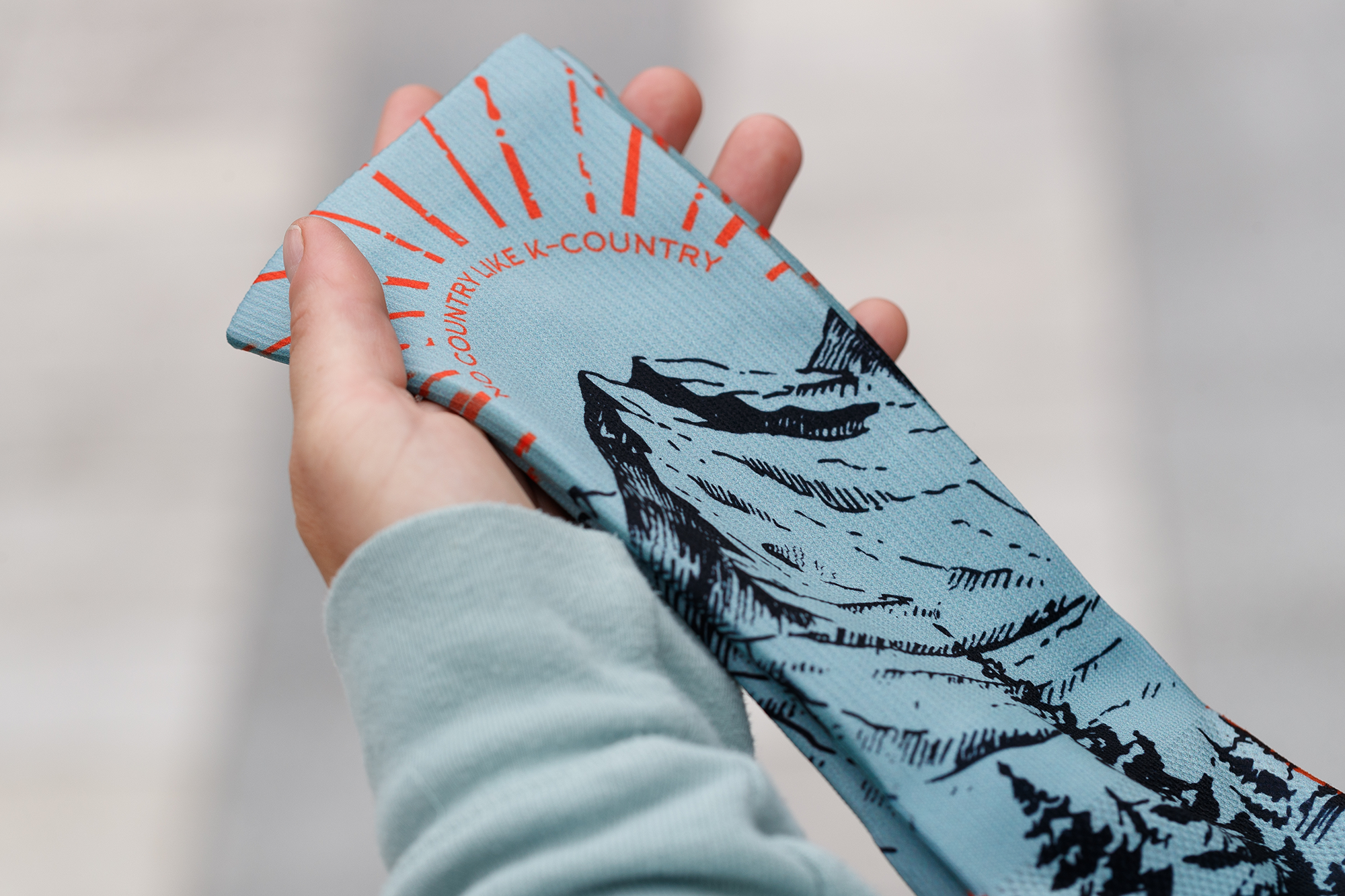
Custom Socks
Cost per unit: Medium, with pricing varying based on order quantity, materials, and customization requirements.
Retention rate: High—among the strongest of any wearable promotional product. The reason is simple: socks are a consumable item. People regularly replace worn-out socks, creating ongoing demand. A well-made pair serves a practical daily purpose, making it more likely to be worn frequently and kept in regular rotation.
According to ASI research, branded outerwear and apparel generates an average of 3,400 impressions over the life of the item in the US. Socks specifically punch above their weight because of daily use frequency. A pair worn twice a week for a year generates over 100 impressions — at the gym, at the airport, in the office, at weekend activities.
The quality multiplier: A poorly made sock — thin, loose, scratchy — gets worn once and discarded. A well-made sock becomes a drawer staple. Custom Lab's socks are built on Outway's performance construction, the same standard. That quality is what earns the rotation that generates the impressions.
Verdict: High retention, high daily use, high impressions per dollar. The ROI case is strong when the quality is right. When it's not, socks join pens in the discard pile.
Why Socks Win the Combination Test
The best swag items pass three tests simultaneously:
- Utility test: Does the person actually need this item regularly?
- Quality test: Is it good enough to prefer over alternatives they already own?
- Brand visibility test: When they use it, does the brand show?
Most swag items pass one or two. Socks pass all three — if the quality is right. They're needed daily, they're preferred when they're genuinely good, and they're visible every time someone puts them on.
A employee reaching for their Custom Lab socks on a Wednesday morning is a better brand impression than a pen sitting in a drawer. Not because socks are inherently better — because those specific socks earned their place in the rotation.
What Actually Makes Swag Work
Across every category, the pattern is the same: the items people keep are the ones that are actually good. Not good for promo items — good, period. Good enough to choose over something they'd buy themselves.
That is the bar Custom Lab is built to clear. Not "good for a corporate sock" — good enough to keep, good enough to wear, good enough to be the pair someone reaches for.
The brands that get this right — Disney, Spotify, Shopify, Red Bull — are not buying the cheapest item in the category. They are buying the item their people will actually use, because that's where the brand impression lives.
Ready to make swag people actually keep? Start with a free design at Custom Lab — tell us your quantity and sock type, and we'll have a concept back within one business day.
Frequently Asked Questions
What corporate swag do people actually keep? Research from the Advertising Specialty Institute consistently shows that wearable items — especially quality apparel and accessories — have the highest retention rates of any promotional product category. Custom socks, quality outerwear, and well-made drinkware top the retention charts because they fill a daily need. The single biggest predictor of retention is quality: people keep items that are genuinely as good as what they would buy for themselves.
Is branded swag worth the investment? Yes, when the item is chosen for utility and produced at quality. ASI research shows branded apparel generates an average of 3,400 lifetime impressions in the US — far more than most digital ad formats at a comparable cost. The ROI collapses when the item is poor quality and gets discarded quickly.
Why do custom socks perform well as corporate swag? Socks are consumed regularly — people wear out pairs and always need more. A well-made branded sock fills a real daily need, earns regular use, and is visible during wear. The combination of high daily utility, genuine need, and brand visibility makes quality socks one of the best-performing promotional items per dollar spent.
What is the minimum order for custom branded socks? Custom Lab's minimum order is 30 pairs — lower than most suppliers, which require 100 to 200 pairs.
Related blogs
.png)

Get your free digital custom sock design today
