
Merino Wool vs. Cotton Custom Socks: Which Should You Choose?
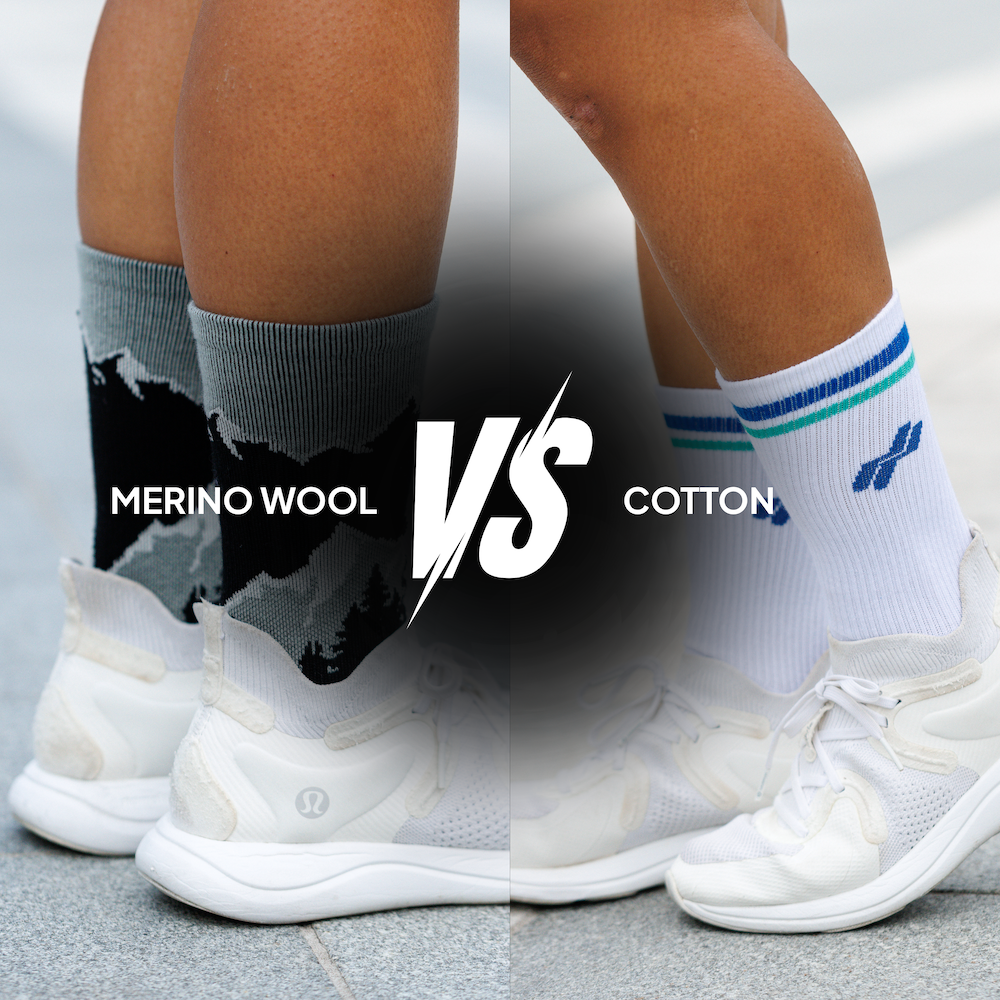
Most buyers don't think about sock material until they're staring at a quote form wondering why one option costs more than another. Merino wool vs. cotton custom socks is the most common material decision we walk customers through, and the right answer depends less on personal preference and more on what the socks actually have to do, whether that's sit under a desk, finish a half marathon, or get handed out at a trade show booth.
This guide breaks down warmth, moisture wicking, durability, wash care, and cost so you can pick a material with confidence before you request a quote.
Merino Wool vs. Cotton Custom Socks: Warmth and Moisture Wicking Performance
Merino wool is a natural fiber that regulates temperature and manages moisture actively. It absorbs vapor from sweat and moves it away from the skin, which helps feet stay warmer in cold conditions and cooler during high output than a fiber that simply holds onto moisture. Cotton, by contrast, behaves more like a sponge. Once cotton fibers absorb sweat, they hang onto it, which means a cotton sock loses insulating power exactly when a wearer needs it most and stays damp long after activity stops.
That difference is why merino wool is the standard fiber choice for hiking, running, and outdoor performance socks, while cotton remains a good choice for lower output, everyday wear where moisture management isn't under the same pressure.
Odor resistance follows the same pattern. Merino wool contains natural lanolin and fiber structures that resist the growth of odor causing bacteria, so socks can go longer between washes without smelling. Cotton has no comparable natural antimicrobial property and tends to hold onto odor even after laundering, particularly in socks worn for workouts or long shifts on your feet.
Durability and Wash Care
Merino wool fiber is more resilient than cotton fiber at the structural level. Wool fibers can flex and bend repeatedly and stretch further before breaking, which is why merino socks tend to hold their shape and resist thinning at the heel and toe longer than a comparable cotton sock under the same wear conditions. Cotton fiber is stiffer and less elastic, so it's more prone to breaking down with repeated washing and high friction wear, such as running or all day retail shifts.
Wash care differs too. Cotton is simple: machine wash and dry with no special handling, which is part of why it stays popular for everyday and giveaway socks. Merino wool holds up well over time but generally benefits from a gentler wash cycle and air drying to preserve fiber structure and fit. It's a small extra step that matters more for socks intended to be worn dozens of times than for one time event giveaways.
Cost Per Pair: What Drives the Difference
Material is one of the biggest factors in your final per pair cost, and merino wool costs meaningfully more than cotton as a raw input. Wool yarn is more expensive to source and process than cotton yarn, and that difference carries through to the finished sock.
Within Custom Lab's standard pricing structure, all quotes still fall inside our published tiers, with material choice, order size, and packaging together determining exactly where in the range you land.
- 30 to 125 pairs: roughly $12 to $17 per pair (CAD, shipping included) with basic packaging.
- 125 to 250 pairs: improved pricing, with custom branded belly bands.
- 250 to 500 pairs: roughly $9 to $12 per pair.
- 500 to 1,000 pairs: volume pricing with a dedicated support contact.
- 1,000+ pairs: our best available rate, priority production, and physical samples included ahead of your full run.
There are no design fees, revision charges, or tooling costs at any tier, so the material decision, merino wool vs. cotton, is the main variable that shifts your per-pair price within the range that applies to your order size. If budget is the deciding factor, cotton keeps you toward the lower end. If performance is the priority, merino is worth the difference.
Best Use Cases: Outdoor and Athletic vs. Everyday and Corporate Gifting
Merino wool is the better fit for outdoor brands, run clubs, gyms, ski and outdoor retailers, and any custom order where the socks need to perform under sweat, temperature swings, or long hours of wear. It's also a strong choice for premium corporate gifts and client swag meant to feel like a genuine upgrade rather than a throwaway giveaway.
Cotton is the practical choice for everyday branded socks, event giveaways, trade show swag, retail add ons, and employee gifting where softness, cost, and simple wash care matter more than moisture wicking performance under athletic load. It's soft against the skin, familiar to wearers, and keeps your per pair cost toward the lower end of your pricing tier.
If your program spans both, such as a corporate gifting run alongside a team athletic order, it's common to run cotton for one batch and merino for the other rather than forcing a single material to do both jobs.
Frequently Asked Questions
1. Is merino wool always better than cotton for custom socks?
Not always. It's better suited to athletic, outdoor, and premium gifting use cases where moisture management and durability matter. For everyday or one time giveaway socks, cotton is a perfectly good, lower cost choice.
2. Does merino wool cost more than cotton in a custom order?
Yes. Merino wool is a more expensive raw material than cotton, and that shows up in your final per pair price. Your quote will still fall inside Custom Lab's standard tiers based on order size and packaging, with material as one of the factors that determines exactly where you land in that range.
3. Can I order a blend instead of choosing one or the other?
Yes. We can blend merino wool with other yarns when needed, most commonly to achieve colours that aren't available in our merino yarn range. Even when blended, the socks are priced as merino, so we generally recommend keeping the majority of the sock merino to preserve its natural performance benefits. If your design requires colours outside the available merino palette, we'll recommend the best blend during the design process.
4. How do wash instructions differ between merino wool and cotton socks?
Cotton is low maintenance. Machine wash and dry with no special handling. Merino wool holds up best with a gentler wash cycle and air drying, which helps preserve fiber structure and fit over repeated wears.
5. Does material choice affect Custom Lab's minimum order or lead times?
No. The minimum order is 30 pairs per design regardless of material, and production still runs 10 to 15 business days with two to five business days of free express delivery, whether you choose merino wool, cotton, or a blend.
Ready to see it for your brand? Submit a free design request.
Related blogs
Get your free digital custom sock design today
