
The ROI of Branded Swag: How to Measure If Your Custom Socks Program Is Actually Working
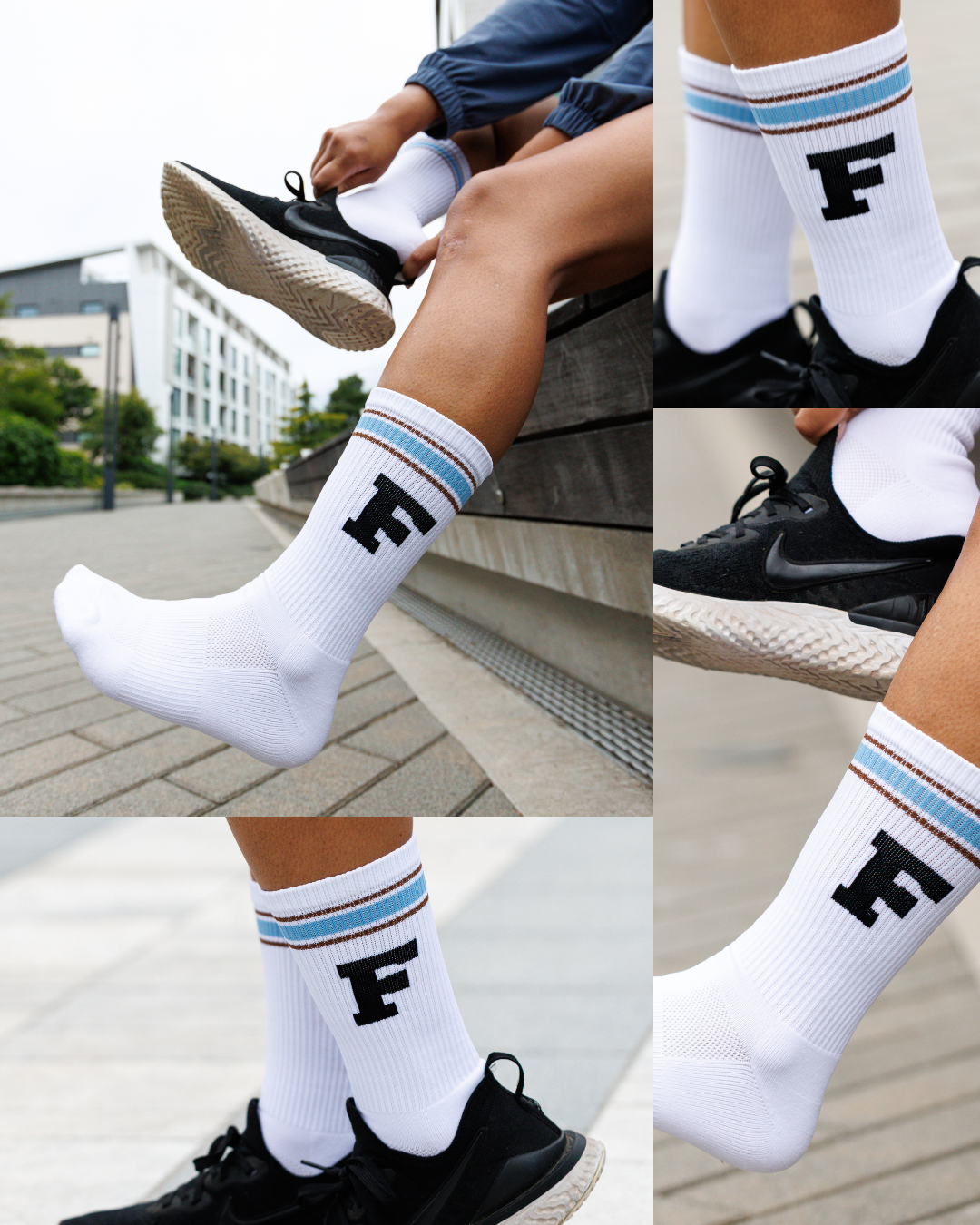
"Did people like the socks?" is the wrong question. It's also, usually, the only one anyone asks after a branded merch order ships. The question your finance team actually cares about, the one that decides whether the program gets renewed or cut next budget cycle, is whether it produced a measurable return.
That's a different exercise, and it has to start before you place an order, not after the boxes go out.
Why "People Liked It" Isn't a Metric
Most swag programs get judged on vibes: a stack of unboxing photos, a few Slack messages, and a general sense that the team seemed happy. None of that is wrong. It just isn't evidence.
It doesn't tell you whether the program moved a number that matters to the business, and it definitely doesn't hold up when someone above you asks for the branded merch ROI on a line item that just cost five figures.
This gap matters more in 2026 than it used to. As marketing and operations budgets get scrutinized line by line, categories without reporting attached are the easiest ones to cut, regardless of whether they were actually working. A swag program that can point to a number survives that conversation. One that can only point to a photo doesn't.
Set Goals Before You Order
If you don't define what "working" means before you place the order, you can't measure it afterward. You can only guess.
Before you submit artwork, decide which of three things the program is actually for: retention, acquisition, or awareness.
- Retention: Keeping the people you already have engaged.
- Acquisition: Turning strangers into leads or customers.
- Awareness: Getting the brand seen in places an ad can't reach.
Each goal implies a different metric, and trying to measure all three from one order usually means measuring none of them well.
A numeric example makes this concrete.
Say you're ordering 250 pairs of custom socks for a trade show booth. At that quantity, per Custom Lab's pricing breakdown, you'd typically land in the roughly $9 to $12 per pair range, with custom branded packaging available.
If the goal is acquisition, decide upfront that success means a target cost per lead, for example, under $10 per qualified contact captured at the booth, rather than deciding after the show that "a lot of people took a pair" counts as a win.
If the goal is retention instead, the metric might be an engagement survey score collected 60 days later, not booth traffic at all.
See How to Order Custom Socks for how minimum order quantities, lead times, and packaging options factor into planning around a specific event date.
A Framework for Measuring Branded Merch ROI
Once the goal is set, measuring branded merch ROI comes down to three inputs, and none of them require enterprise analytics software. A spreadsheet and a survey tool cover most of it.
Engagement and Gear Retention
Track how many people are still using or wearing the item weeks or months later, and whether that correlates with something you already measure, such as employee retention, event attendance, or repeat purchases.
Industry surveys from the promotional products industry have found that nearly two thirds of consumers are very likely to keep a branded product for six months or longer, and roughly 90% report keeping branded merchandise regularly or occasionally rather than discarding it. Apparel in particular tends to outperform other categories because it gets worn instead of sitting in a drawer.
Referral and Social Impressions
Track how often the item appears organically through tagged photos, social mentions, or people asking a wearer where they got it.
This is harder to measure precisely, but a branded hashtag, a QR code on your packaging, or even a quarterly count of unprompted mentions gives you a useful directional metric instead of no metric at all.
Cost Per Impression vs. Traditional Advertising
This is often the most finance friendly metric because it maps directly to how advertising spend is already evaluated.
Industry research from ASI's Global Advertising Impressions Study estimates promotional products generate impressions at roughly half a cent each on average, compared with approximately $0.018 for prime time television and national magazine advertising. Apparel has also been shown to generate some of the highest lifetime impression counts of any promotional product category.
Separate PPAI research estimates an average promotional products ROI of 344% and found that 83% of consumers say they're more likely to do business with a brand after receiving a promotional product.
These aren't Custom Lab statistics. They're published industry benchmarks that provide a useful comparison when branded merchandise is being evaluated alongside paid media.
When Custom Socks Outperform Other Swag Categories
Not every swag category performs equally, and apparel has structural advantages that pens, koozies, and desk accessories simply don't.
Industry research has consistently found apparel and outerwear rank among the strongest categories for both brand recall, with roughly 85% of recipients remembering the brand after receiving a promotional item, and lifetime impressions because garments get worn repeatedly in public instead of sitting in a drawer.
Custom socks combine those apparel advantages with a lower unit cost and a larger, more durable branding surface than many other wearable products. A knit in logo becomes part of the sock itself instead of relying on a printed graphic that may wear over time.
That combination is one reason socks can produce stronger branded merch ROI than higher priced apparel for the same budget. At 30 to 125 pairs, you're typically looking at roughly $12 to $17 per pair, while achieving similar visibility at a lower cost per impression than a comparable hoodie or jacket order.
Custom Lab has produced more than 5 million pairs using this approach, as detailed in 5 Million Pairs Later: How Custom Lab Became the Industry Benchmark for Custom Socks, with production focused entirely on performance quality socks rather than novelty giveaways. That aligns closely with where industry research suggests promotional product ROI is strongest.
What the 2026 Push for Marketing Accountability Means
Marketing budgets are under more scrutiny in 2026 than they were even a few years ago. More finance teams are asking every department, not just paid media, to justify spending with measurable outcomes instead of anecdotes.
Swag and branded merchandise have historically been treated as a soft benefit category. That exemption is disappearing.
Building a simple measurement plan into your program before you order, rather than after a budget review questions the expense, can be the difference between a program that gets renewed and one that quietly disappears.
Frequently Asked Questions
1. What actually counts as branded merch ROI for a custom socks program?
It depends on the goal you set before ordering.
For an internal employee gift, ROI may show up as improved engagement or retention survey results. For a trade show giveaway or retail collaboration, it may be measured through qualified leads, booth traffic, or product sales.
There's no universal formula. Branded merch ROI only has meaning once you've defined what success looks like for that specific program.
2. How do I track cost per impression for custom socks?
Divide the total cost of the order by the estimated number of times the socks will be seen over their useful life.
Because apparel is worn repeatedly, the cost of each impression decreases over time, which aligns with industry research showing promotional apparel among the lowest cost per impression advertising channels available.
3. Is custom apparel really a better ROI than a digital ad campaign?
They accomplish different objectives and shouldn't be treated as direct substitutes.
Digital advertising is designed for immediate, measurable actions such as clicks or conversions. Branded apparel is designed for repeated exposure and long term brand recall.
Industry research suggests promotional products deliver impressions at a fraction of the cost of television or print advertising, but they build awareness over time rather than generating immediate responses.
4. What's a realistic order size to start measuring branded merch ROI?
Custom Lab's minimum order is 30 pairs per size, per design, and per sock height, which is enough to run a controlled test at one event, one office, or one location before scaling into a larger order.
See How to Order Custom Socks for more on minimum order quantities and production timelines.
5. How long should I run a program before judging the results?
Give it at least one complete measurement cycle.
That could mean one quarter for employee engagement surveys, one event season for lead generation, or one retail restock cycle.
Judging a wearable promotional product after only a few weeks will almost always underestimate its long term ROI because apparel continues generating impressions for as long as people keep wearing it.
Ready to start? Submit a free design request and get your digital mockup within 1 business day, no commitment required.
Related blogs
Get your free digital custom sock design today
